
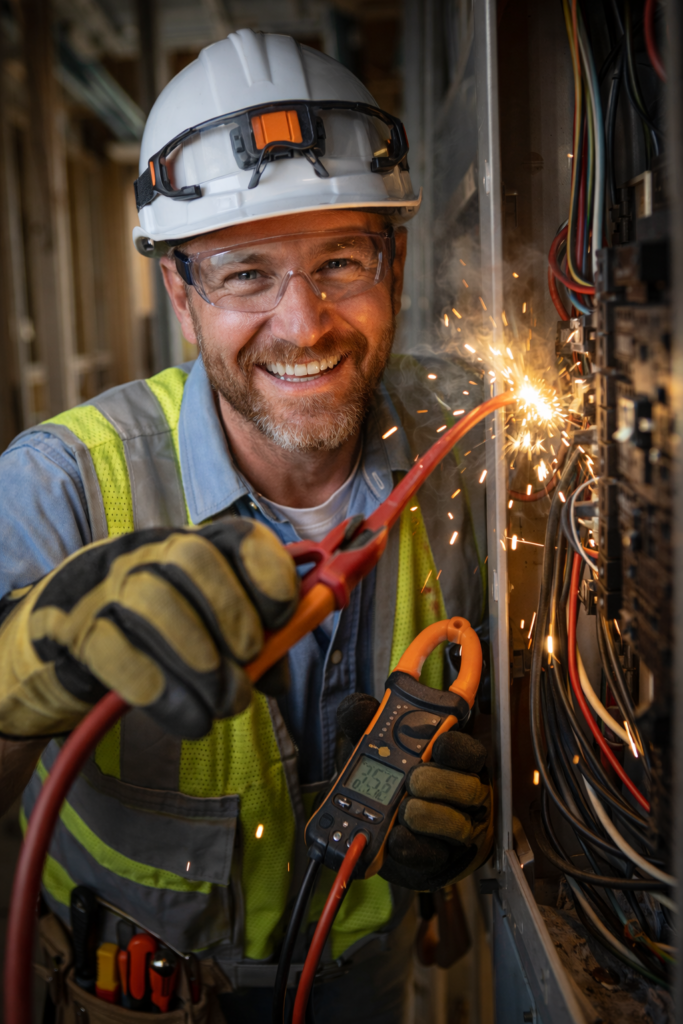
No two electrical companies are the same. Whether you’re wiring custom homes, working on tract developments, installing panels for commercial build-outs, or troubleshooting service calls, your company faces liability, property, and operational exposures every day.
The right insurance program does more than check a box for a contract requirement. It protects your balance sheet, keeps you compliant with general contractors (GCs), and ensures one claim doesn’t wipe out years of hard work.
Below is a detailed breakdown of the core insurance policies every electrician should consider—and why they matter both to you and to the contractors you work with.
1. General Liability (GL) or Business Owner’s Policy (BOP)
At the foundation of any electrician’s insurance program is either a General Liability (GL) policy or a Business Owner’s Policy (BOP).
What General Liability Covers
A GL policy protects your business against third-party claims for:
- Bodily injury (e.g., someone trips over your extension cord)
- Property damage (e.g., you damage drywall or cause a fire)
- Personal and advertising injury where you damage another electricians reputation or use their proprietary information in your own advertising.
- Completed operations (damage after your work is finished)
For electricians, completed operations coverage is especially critical. An electrical fault that causes damage months later could result in a large claim. Without completed operations protection, your company could be personally responsible.
What a Business Owner’s Policy (BOP) Adds
A BOP includes General Liability but also bundles in commercial property coverage. This can insure:
- Your office or shop (the physical building if you own it or the buildout if you are leasing .
- Owned equipment stored at your premises
- Business personal property such as office furniture and computers
- Loss of business income after a covered loss
For electricians who own a shop, warehouse materials, or have significant equipment at a fixed location, a BOP can be more cost-effective than buying separate policies.
Required Endorsements Electricians Commonly Need
Having a GL or BOP isn’t enough. Most electrical contractors must add specific endorsements to satisfy general contractors and project owners.
Blanket Additional Insured (AI)
This endorsement extends your liability coverage to upstream parties—such as:
- General contractors
- Property owners
- Developers
Why GCs Require It:
If they are sued due to your work, they want protection under your policy. Without AI status, they have no access to your insurance defense or limits.
Why It Benefits You:
Without this endorsement, you may lose bids or be disqualified from projects. Blanket AI language automatically extends coverage when required by contract, saving time and administrative work.
Blanket Waiver of Subrogation
This prevents your insurance company from seeking recovery from a GC or project owner after paying a claim.
Why GCs Require It:
They don’t want your insurer pursuing them if they share partial responsibility.
Why It Benefits You:
It keeps contractual relationships smooth and prevents disputes between insurance carriers that could delay claim resolution.
Primary and Non-Contributory Wording
This ensures your policy responds first before the GC’s insurance.
Why GCs Require It:
They want your coverage to defend and indemnify them without tapping into their own policy limits.
Why It Benefits You:
It keeps you competitive and contract-compliant. Without it, large contractors may refuse to work with you.
Ongoing and Completed Operations AI
If you work for large contractors, they often require:
- Additional Insured – Ongoing Operations
- Additional Insured – Completed Operations
Ongoing Operations covers liability during the project.
Completed Operations covers liability after the job is finished.
This is especially important in electrical work, where latent defects can lead to claims years later.
Carrier Restrictions: Tract Home Work
If your company works on tract homes (large-scale residential developments), some insurance carriers may:
- Decline to quote
- Restrict coverage
- Increase premiums significantly
Why?
Tract home projects often involve:
- High volume work
- Fast timelines
- Increased exposure to repetitive defect claims
It’s critical to work with an agent who understands which carriers are comfortable with tract development exposure and how to properly classify your operations. Some tract home exposure may be acceptable to one carrier while another carrier will decline for more than two homes in a development.
2. Tools, Equipment & Installation Coverage
Electricians rely heavily on tools and materials. Standard GL coverage does NOT protect these exposures.
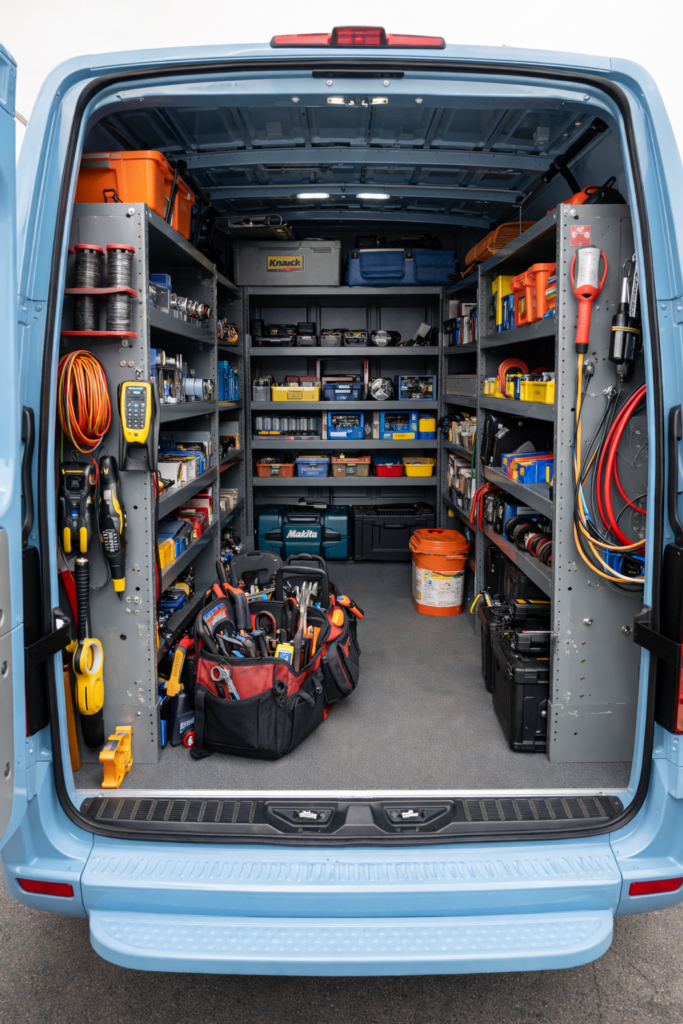
Tools & Equipment Coverage
If you have a BOP, tools coverage can sometimes be added by endorsement. If you have only GL, you may need a separate policy, called an Inland Marine policy.
This can cover:
- Power tools
- Testing equipment
- Generators
- Mobile equipment
- Jobsite theft
Why It Matters:
Tools are frequently stolen from job sites and vehicles. Without coverage, replacing thousands of dollars in equipment comes directly out of pocket.
Leased or Rented Equipment
If you lease lifts, trenchers, or other equipment, your rental agreement likely makes you responsible for:
- Physical damage
- Theft
- Loss of use charges
A tools/equipment policy can extend to leased or rented items. Without it, you could be responsible for replacing expensive machinery.
Inland Marine Coverage
Despite the name, Inland Marine insurance covers property in transit or at job sites.
For electricians, this policy is often essential for:
- Contractor’s equipment
- Installation floaters
- Materials awaiting installation
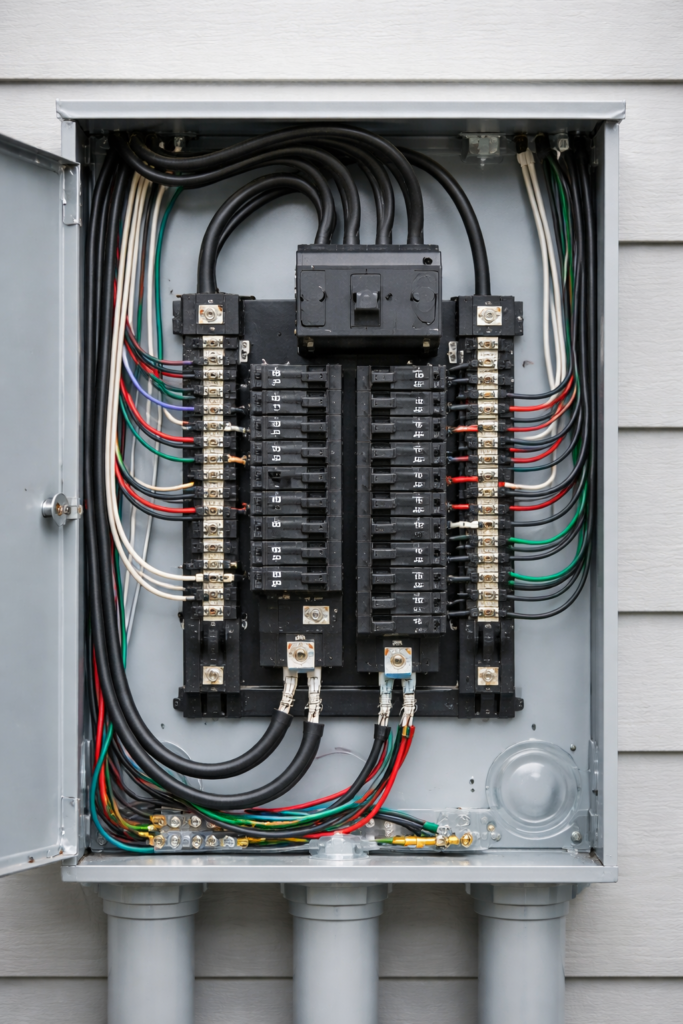
Contractor’s Installation Exposure
This is a commonly overlooked gap.
Example:
You purchase electrical panels, wiring, or fixtures for a project. These materials:
- Don’t belong to the property owner yet so they are not covered by their property insurance.
- Aren’t covered under your GL or BOP without endorsement.
If they are stolen or damaged before installation, who pays?
Without an Installation Floater (a type of Inland Marine coverage), you may absorb the entire loss.
Many of the above mentioned Inland Marine needs can be covered by a single policy or can be added to a BOP.
Builder’s Risk vs. Installation Coverage
Sometimes the property owner may cover materials under a Builder’s Risk policy.
Builder’s Risk typically covers:
- The structure under construction
- Materials onsite
- Materials in transit (sometimes)
However, not all Builder’s Risk policies automatically cover subcontractor materials. You should never assume coverage exists—always verify.
When in doubt, having your own Installation coverage provides certainty and control.
3. Workers’ Compensation
If your electrician company has employees, Workers’ Compensation is legally required in most states including Colorado.
Workers’ Comp covers:
- Medical expenses
- Lost wages
- Rehabilitation
- Employer liability protection
Why GCs Require It:
No general contractor wants uninsured workers on their jobsite. Without Workers’ Comp:
- You may be barred from the project
- The GC’s policy may be forced to respond
- You could face fines and stop-work orders
Why It Benefits You:
It protects your company from lawsuits by injured employees and ensures injured workers receive care quickly.
4. Commercial Auto
If your business owns vehicles—or employees drive vehicles for business—you likely need Commercial Auto coverage.
Commercial Auto covers:
- Bodily injury and property damage liability
- Physical damage to your vehicles
- Uninsured/underinsured motorists
- Hired and non-owned auto
Employee-Driven Vehicles
Even if employees drive their own vehicles, your company can be sued if:
- They are on company business
- They cause an accident
In that case, you may need Hired and Non-Owned Auto Liability.
Why GCs Require It:
Auto accidents are among the largest claim categories. Contractors want proof you carry proper limits before allowing your vehicles onsite.
5. Why Insurance Matters Beyond Compliance
Insurance isn’t just about meeting contract requirements—it’s about business continuity.
A serious claim can result in:
- Six-figure property damage
- Injury lawsuits
- Defense costs alone exceeding $50,000
- Loss of key contracts
Electrical contractors operate in high-risk environments. One wiring error can lead to fire loss, business interruption for a property owner, or even catastrophic injury.
A properly structured insurance program:
- Protects your assets
- Preserves your reputation
- Keeps you eligible for larger projects
- Builds credibility with general contractors
6. How Insurance Helps You Win Larger Contracts
As your electrician company grows, insurance requirements become more demanding.
Large GCs often require:
- $1M/$2M General Liability minimum
- $1M Auto Liability
- Workers’ Compensation statutory limits
- Umbrella or Excess Liability ($1M+)
- Specific endorsement wording
If your policies are not structured correctly, you may:
- Delay projects
- Lose bids
- Be removed from vendor lists
Having the proper endorsements already in place allows you to provide certificates quickly and professionally.
7. Contractors Professional Liability (Errors & Omissions)
One last thing. Many electricians assume that General Liability will cover any mistake related to their work. However, General Liability is designed to cover bodily injury and property damage—not financial losses caused by design errors, miscalculations, or professional advice.
That’s where Contractors Professional Liability (CPL)—also known as Errors & Omissions (E&O)—comes in.
Final Thoughts: Building a Strong Insurance Foundation
The best insurance for your electrician company isn’t just the cheapest policy—it’s the one built around how you actually operate. Every electrician is different and your insurance needs to reflect coverage for your particular exposure.
When structured properly, your insurance program becomes a competitive advantage—not just an expense. If you’re unsure whether your current policies include everything you need or if you think you may be paying more than you need to, it may be time for a full review.
In the electrical industry, one spark can change everything—and the right coverage ensures your business keeps moving forward safely and profitably.

 The Best Insurance For Your Towing Company
Leave a Reply